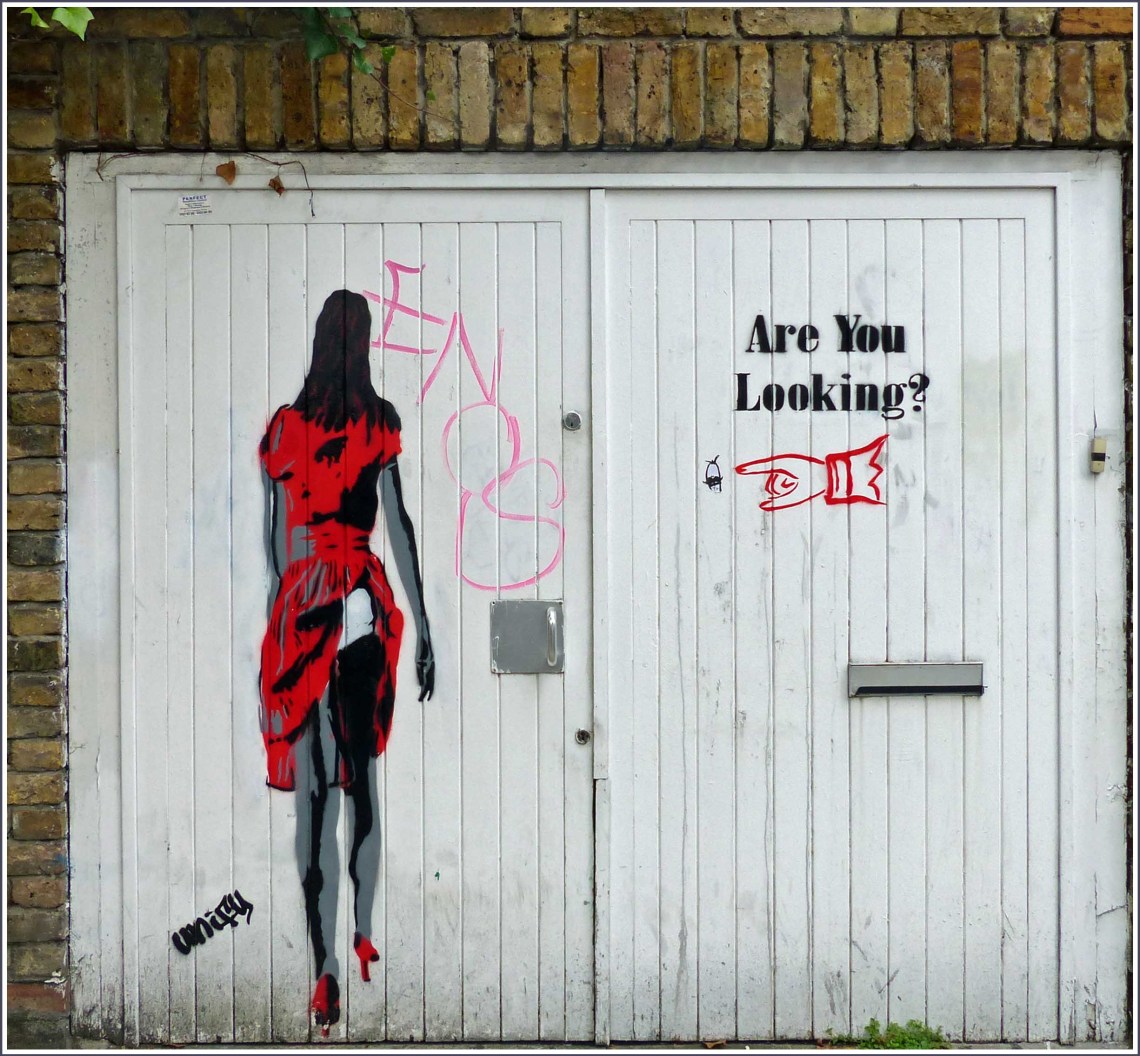
When I photograph street art I am conscious that for the most part the success of the image depends on the quality of the piece of art itself, and that any creativity involved is that of the original artist, not mine as a photographer. So I often try to create something new by involving a passer-by, or two.
-
-
I didn’t go to Costa Rica to see street art; like most visitors, my main interests were in its landscapes and its wildlife. The country is famous for being one of the most biodiverse in the world. So maybe it’s not so surprising after all to see that biodiversity celebrated on the streets of Sant Elena, the main tourist hub in the Monteverde region.
-
One form of public art that really enhances many of our cities are the many fountains to be found in our squares and parks. However I often find myself drawn to photograph these. I like to try to capture the flowing water, or perhaps to pick out interesting details in their sculptural groups.
-
On the outskirts of Nairobi is a very special place, where orphaned baby elephants find safety and refuge… Thus I started a blog post last May about the amazing work being done at the David Sheldrick Elephant Orphanage. Imagine how thrilled I was when many of those residents made their way, in sculptural form, to London’s Spitalfields Market!
-
On a chilly January day in London I am inevitably dreaming of warmer climes. A place where the sun is shining; where a stroll through city streets delivers colour, warmth, a bit of excitement and a lot of interest.
-
When I started blogging almost eighteen months ago I had no idea that the blogosphere was full of challenges, and it took me some time to discover them. Once I did, I was hooked, and especially on photo challenges.
-
From time to time while travelling I find myself taking photos on a theme, even if I hadn’t intended to when I set out. In Cuenca and Tallinn it was doors; in New Mexico it was Harley Davidson motorbikes. And in Indochina it was not only the motorbikes but the bike helmets.
-
Plovdiv’s Kapana district is an object lesson in how to transform run-down into lively, neglected into loved. In this part of the city , a maze of small streets follows much the same pattern as the Ottoman souk which once stood here, although the mainly wooden buildings of that era are long since gone. The very name, Kapana, recalls that maze, as it means ‘Trap’; once among these streets it was hard to find your way out!
-
In a previous post I took you on a walk along the River Tyne in Newcastle and introduced you to its famous bridges. But I neglected to mention all the public art to be found along the Quayside. So now I want to rectify that omission.
-
In the Plaza de la Encarnación of Seville a strange structure reaches skywards. This is the Metropol Parasol, often referred to by locals as the Mushrooms, Las Setas de la Encarnación. The dramatic forms arch overhead, framing views of the surrounding streets and buildings.