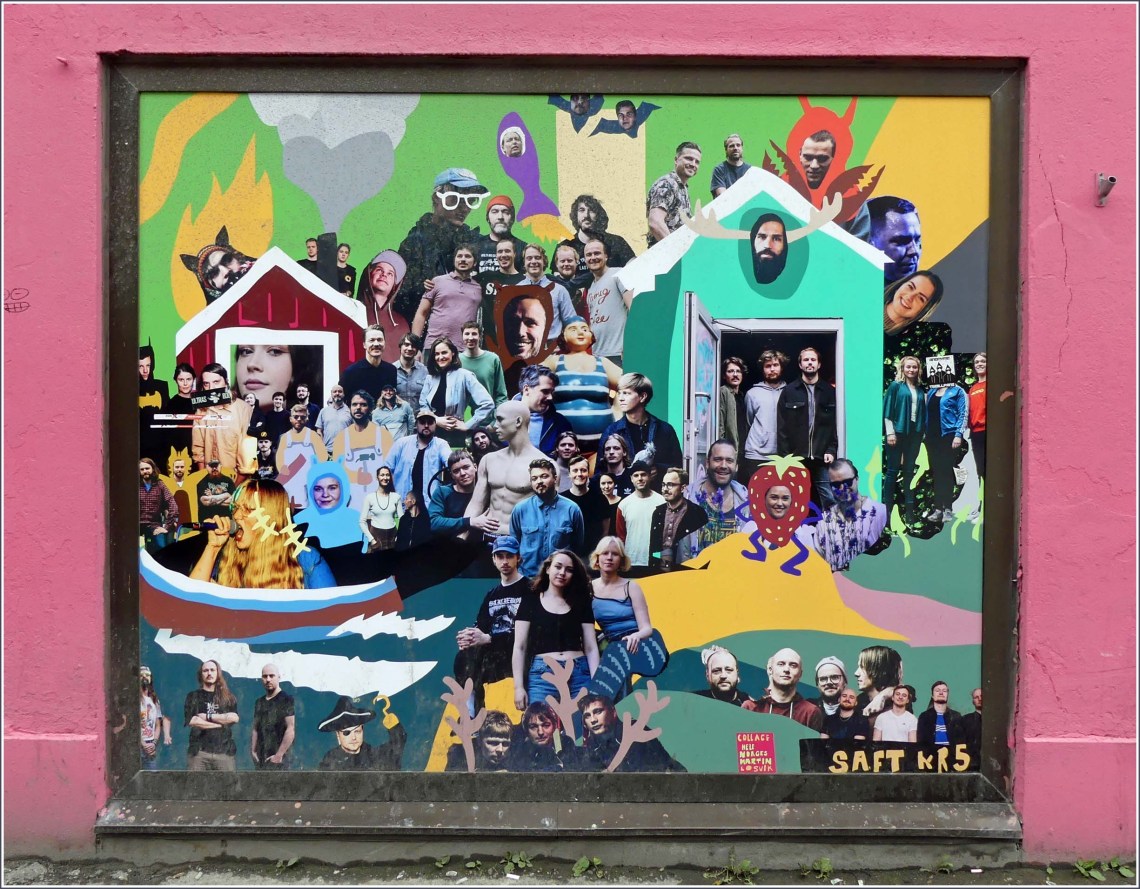
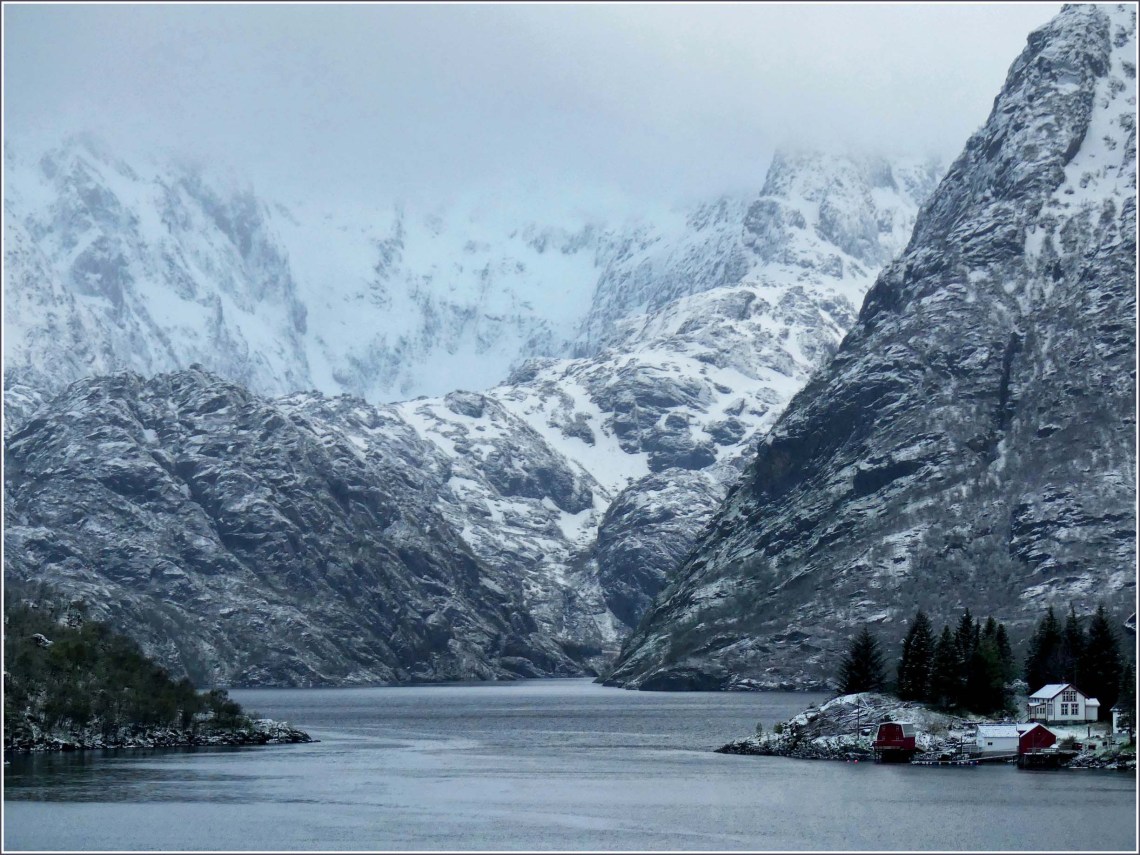
Tromsø is in many ways a surprising city, and full of extremes. Located well inside the Arctic Circle it experiences both Midnight Sun (in summer) and Polar Night (in winter). It can boast the world's northernmost university, its northernmost botanical garden, northernmost cathedral – and northernmost brewery!
-
-
The Hurtigruten line is first and foremost a postal service and ferry, although it caters well to tourists too with a cruise-like offering of quality food, excursions and on-board lectures. Many of the stops the ships make are brief, typically twenty minutes. Supplies for these small coastal towns and villages are off-loaded, post and parcels collected. A few passengers embark or disembark. Most are locals, visiting family or returning home after time away. Only a handful will be tourists, hikers perhaps.
-
In Viking times this was the capital of Norway. Today it is a busy modern city with an impressive cathedral. It lies where the Nidelva river meets Trondheim Fjord, creating an excellent sheltered harbour. Although south of the Arctic Circle and therefore experiencing neither Polar Night nor Midnight Sun, in the summer months it remains light enough all night for artificial lighting only to be needed in poor weather.
-
If you’re looking for summer warmth this isn’t the place to come. On my recent trip to Trondheim (south of the Arctic Circle) and Tromsø (north of it) I experienced some sun, yes, but also rain, hail, sleet and snow!
-
Koprivshtitsa is no ordinary town but rather a time capsule. Several of its houses are associated with significant players in the 1876 April Uprising against Ottoman rule. The uprising failed, but a fire had been ignited. The brutalities committed by the Turks while suppressing it led to widespread condemnation across Europe which was the trigger for the Russo-Turkish War. This ended in Turkish defeat. Thus the April Uprising can be regarded as having eventually achieved its original aim, the liberation of Bulgaria from the Ottoman Empire.
-
Some people’s idea of holiday bliss is to stretch out on a lounger on a beach, soak up some rays or enjoy the shade of an umbrella while maybe reading and sipping a cold drink. That’s great, but it’s not for me. I can’t take hot sun and although I love a good read I prefer to spend my precious holiday time exploring new places and taking photos. I’d much prefer to absorb the local culture rather than the sun’s rays, and I’ll take my cold drink in a café with a view please.
-
Under the dictatorship of Enver Hoxha many freedoms were denied to Albanians. Among them the freedom to travel abroad, the freedom to express dissent, and the freedom to worship. Hoxha declared that ‘the only religion of Albania is Albanianism’.
-
Four indigenous groups consider Tayrona National Park part of their ancestral territory. The park management acknowledges this, saying that ‘the sacred sights within must be protected and respected as part of the cultural heritage’.
-
It’s not enough to bring peace to a city, you also need prosperity. So while the transformation of Medellín from no-go drugs capital of Colombia to a safer and more visitable city started in its outlying comunas, the city centre has been vital to its continued development.
-
Colombia is notorious for a particular crop, but as a visitor you’re not very likely to visit any farm growing that! However, they are very openly proud of their coffee and many farms welcome visitors. We visited a typical farm with a guide, Juan-Paolo, who was a former employee.